


CFTC Casino-Style Bets Rule Clarifies Sports Betting Regulations

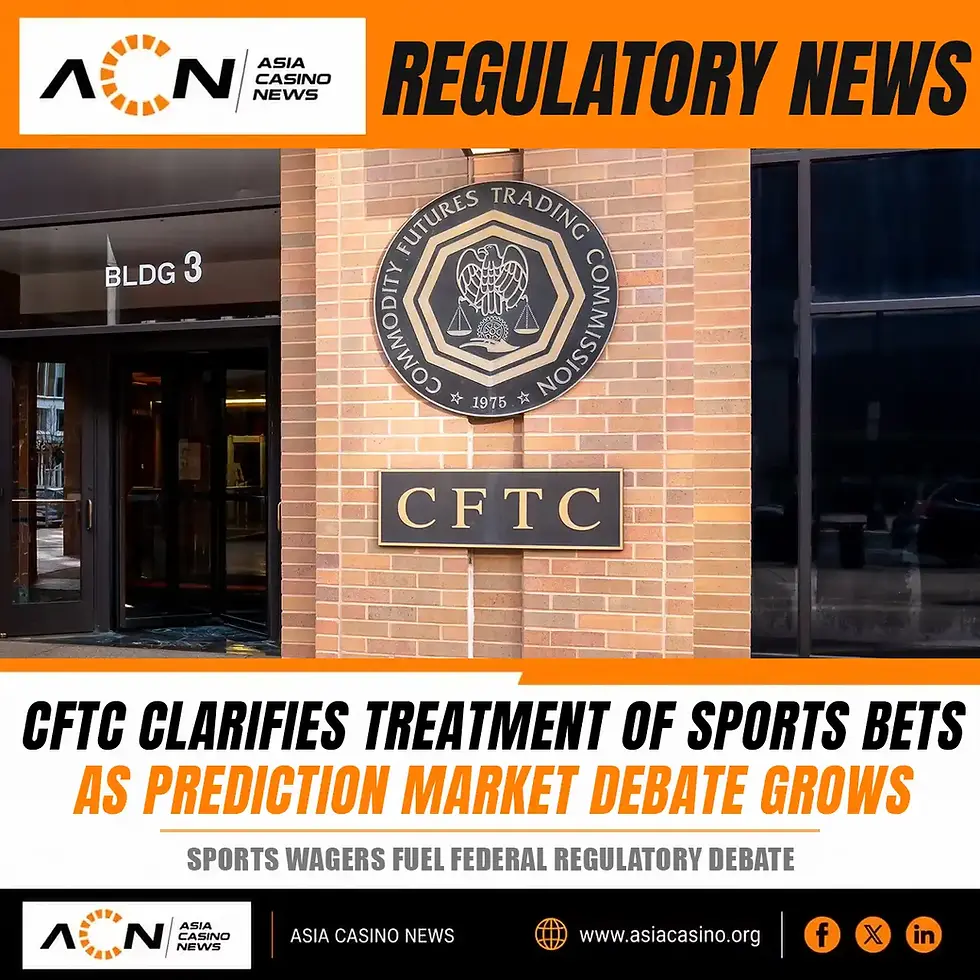
The CFTC casino-style bets rule formalizes the US Commodity Futures Trading Commission's position that casino-style wagers, including traditional sports bets, fall outside the legal definition of a swap. The move comes as US regulators continue to examine how prediction market contracts should be classified under federal law.
The agency announced the interim final rule on October 9, 2026. It also established a 30-day public comment period tied to publication in the Federal Register. The measure addresses casino-style gambling products, while a separate regulatory proposal focuses on certain event contracts traded on prediction markets.
The distinction matters to gaming companies and financial trading platforms because products linked to the same event can be subject to different legal frameworks depending on their structure and regulatory classification.

CFTC casino-style bets rule defines regulatory boundaries
The CFTC's interim final rule formalizes its position that casino-style gambling products, including conventional sportsbook wagers, are excluded from the swap definition under the Commodity Exchange Act.
CFTC Chairman Michael S. Selig said the action was intended to clarify the limits of the agency's regulatory authority. The commission's announcement described casino-style gambling products as distinct from derivatives.
The classification matters because swaps fall within the federal derivatives regulatory framework, whereas traditional sports betting is generally governed through state-level gambling laws in the United States.
The rule does not mean that every sports-related contract or prediction market product is automatically lawful. The legal treatment of an individual product depends on its structure and the laws that apply to it.
Separate CFTC proposal targets prediction market contracts
Alongside the interim final rule, the CFTC issued a separate proposal addressing event contracts linked to outcomes such as sporting competitions, political developments, cultural events and weather.
The proposed approach would expressly bring certain event contracts within the swap definition. The commission's position is that these contracts may qualify as financial derivatives under the Commodity Exchange Act.
This creates an important distinction between a conventional sportsbook wager and a contract traded on a prediction market. Both may be linked to the same sporting event, but their legal classification can differ according to how the products are structured and offered.
The proposal remains separate from the interim final rule covering casino-style gambling products. Its final regulatory impact will depend on the outcome of the rulemaking process.
Why the distinction matters for sports betting operators
Prediction markets allow participants to trade contracts tied to the occurrence or non-occurrence of specified events. Contract prices can change as market participants reassess the likelihood of an outcome.
Traditional sportsbooks generally operate through a different model, accepting wagers at published odds under the relevant gambling framework.
As prediction market platforms expand their sports-related offerings, the boundary between financial trading and gambling has become a subject of regulatory and legal disagreement. Operators must consider not only how a product is marketed but also its structure, the regulator with jurisdiction and any applicable state restrictions.
The CFTC's latest actions clarify the commission's position, but they do not settle every dispute involving sports event contracts. Questions about federal authority, state gambling laws and the classification of individual products may continue to be addressed through litigation and further regulatory proceedings.
Potential implications for the global gaming industry
The US developments are worth watching for casino groups, sportsbook operators, prediction market businesses and investors with international exposure.
For established gaming companies, the distinction between gambling products and financial contracts can affect licensing considerations, compliance obligations and decisions about entering new markets. For prediction market operators, the separate proposal highlights the importance of understanding how regulators classify event-based contracts.
The implications for Asia-Pacific markets are more indirect. The CFTC's actions apply within the US legal framework and do not automatically change gambling laws in the Philippines or other Asian jurisdictions.
Regional regulators and operators may nevertheless monitor the proceedings as they assess their own approaches to emerging gaming products and the relationship between gambling and financial markets.
The immediate focus is now on implementation of the interim final rule and the separate proposal's progress through the regulatory process. Those developments will help clarify how the United States intends to distinguish conventional gambling from event-based financial contracts.
About Asia Casino News
Asia Casino News covers developments across the casino, iGaming, betting, regulation and gaming industries in Asia and international markets. Our coverage follows the legal, regulatory and commercial changes shaping the global gambling industry. Visit Asia Casino News for more industry news, analysis and gambling guides.





Comments