


Illegal Online Gambling Philippines: 200 Detained in Zamboanga

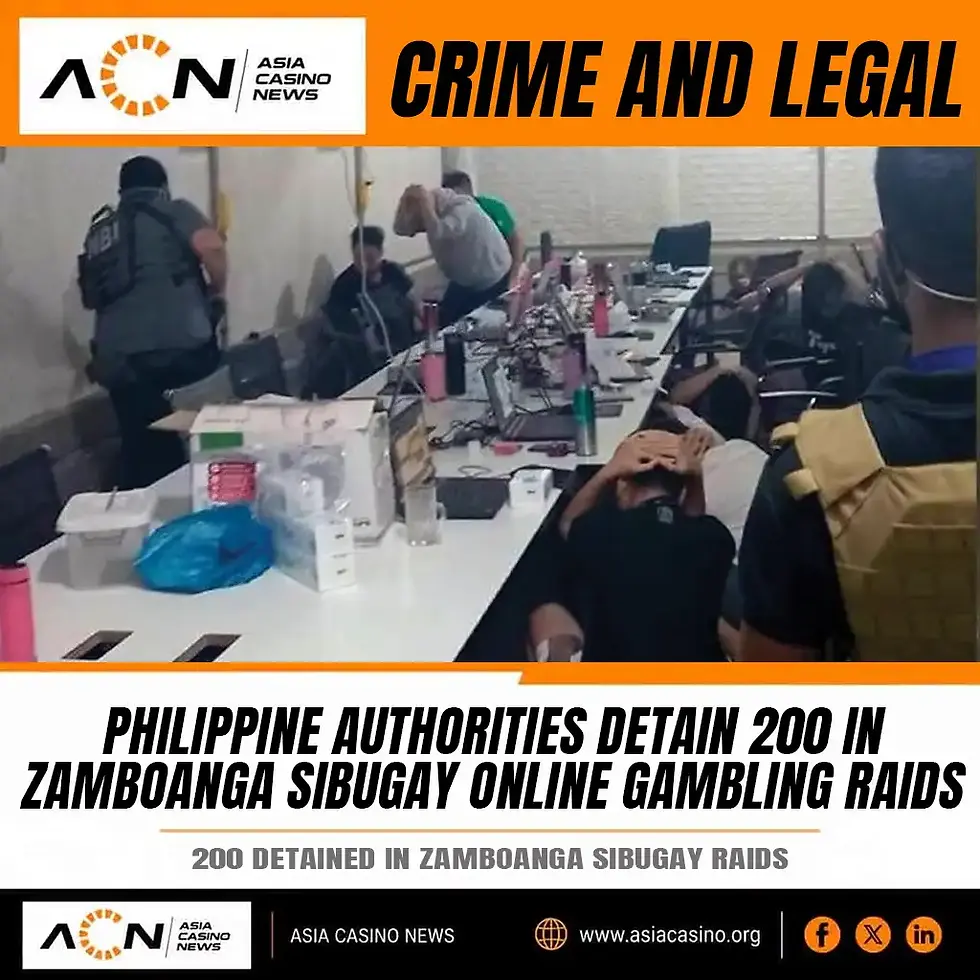
Philippine authorities detained around 200 people, including Chinese nationals, during coordinated raids on suspected illegal online gambling hubs in the municipalities of Alicia and Siay in Zamboanga Sibugay, according to a report by Pilipino Star Ngayon and a separate report by Philstar.
The operations were conducted before dawn on October 2 by personnel from the National Bureau of Investigation (NBI), Bureau of Immigration (BI), Philippine Army's 102nd Brigade under the 1st Infantry Division, and Police Regional Office 9. Authorities reportedly seized a large quantity of electronic devices from the locations.
The raids are significant for the Philippine gaming sector because offshore gaming operations have been prohibited nationwide since the government ordered the closure of POGO and other offshore gaming activities. The country's anti-POGO framework now expressly prohibits offshore gaming operations and related activities.

Illegal Online Gambling Philippines: Why the Zamboanga Raid Matters
According to Philstar, authorities acted on information from local officials, residents and confidential sources concerning the presence of foreigners and Filipino associates allegedly operating clandestine online gambling networks in Alicia and Siay.
The operations were jointly conducted by the NBI, BI, Army and police, with Philippine Army commanders Lt. Gen. Donald Gumiran and Maj. Gen. Yegor Rey Barroquillo Jr. confirming the detention of approximately 200 individuals.
The Pilipino Star Ngayon report described the facilities as suspected scam-related online gaming hubs and said authorities confiscated about 2,000 gadgets that could have been used in the operations. The report also said authorities were validating the immigration status of those detained.
The discrepancy between the reports over the precise number and type of electronic devices seized means ACN is treating the equipment figure as reported rather than independently verified.
Authorities examine immigration and trafficking concerns
The investigation is not limited to whether the facilities were operating unauthorized gambling activities.
Authorities are also examining the immigration status and circumstances of foreign nationals found at the locations. Pilipino Star Ngayon reported that some of those detained could potentially be victims of trafficking, exploitation, coercion or unlawful recruitment.
That distinction is important because the detention of an individual at an alleged illegal gaming facility does not, by itself, establish that the person operated or participated in an illegal gambling business.
The Expanded Anti-Trafficking in Persons Act of 2022, or Republic Act No. 11862, strengthened Philippine laws covering trafficking, exploitation and related offenses.
The Philippine Immigration Act of 1940, meanwhile, provides the legal framework governing the admission, presence and removal of foreign nationals in the Philippines.
Authorities have not, based on the materials reviewed for this article, announced final criminal findings against each person detained in the Zamboanga Sibugay operations.
Illegal online gambling is now prohibited under the Anti-POGO framework
The raids come after a major change in Philippine gaming regulation.
Executive Order No. 74, signed on November 5, 2024, ordered the immediate ban on Philippine offshore gaming, internet gaming and other offshore gaming operations. It required existing POGO, Internet Gaming Licensee and other offshore gaming operations to cease operations and wind up by December 31, 2024, or earlier.
PAGCOR subsequently stated that all Internet Gaming Licensees and authorized providers under the former offshore-gaming framework were cancelled effective December 15, 2024. The regulator has warned that entities claiming to possess a valid PAGCOR offshore-gaming license are unauthorized.
The policy was later reinforced by Republic Act No. 12312, or the Anti-POGO Act of 2025, which was approved on October 23, 2025.
The law declares offshore gaming operations in the Philippines unlawful and prohibits not only operating offshore gaming businesses but also establishing POGO hubs, providing certain gaming-related services and equipment, and aiding or abetting prohibited offshore gaming activity.
The law also permanently revoked or cancelled previously issued POGO-related licenses and provides for the cancellation of work permits and visas connected to offshore gaming employment, subject to the law's provisions.
Enforcement has continued after the POGO ban
The Zamboanga Sibugay operation is part of a broader enforcement environment in which Philippine authorities continue to pursue suspected illegal gaming activities despite the formal end of the POGO industry.
In May 2026, the NBI announced the arrest of six Vietnamese nationals in Makati in an alleged online gambling-related operation. The agency said it obtained search warrants after surveillance and found individuals operating computers displaying customer-support platforms, Telegram chats and websites linked to an online gambling platform.
In another May 2026 operation, the NBI said it shut down an illegal online gambling hub in Angeles City after verification with PAGCOR confirmed that the online casino platforms involved did not have the required licenses. Six individuals were subsequently presented for inquest proceedings over alleged violations involving illegal gambling and cybercrime.
These cases illustrate the distinction between regulated Philippine gaming activity and prohibited offshore operations. PAGCOR's current offshore-gaming notice states that companies or websites claiming to hold a valid Philippine offshore-gaming or Internet Gaming License are unauthorized.
What the Zamboanga Sibugay case could mean for the gaming sector
For the Philippine iGaming industry, the latest operation reinforces that the government's policy is no longer centered on regulating POGO operations as a licensed offshore-gaming segment.
Instead, the legal framework has moved toward prohibition and enforcement.
The Anti-POGO Act specifically covers physical infrastructure associated with offshore gaming, including POGO hubs and sites, as well as gaming equipment and services connected to prohibited operations.
That means enforcement can extend beyond an online gambling website itself to the people, facilities, technology and support activities allegedly used to operate an offshore gaming business inside the Philippines.
For operators and technology companies active in the broader Philippine gaming market, the distinction between lawful domestic gaming activity and prohibited offshore gaming is therefore increasingly important.
PAGCOR continues to regulate authorized gaming activities within its mandate, while offshore gaming operations covered by the ban are outside the country's permitted gaming framework.
Investigation remains ongoing
The authorities' next steps in the Zamboanga Sibugay case are expected to include verification of the detainees' identities and immigration status, examination of seized electronic equipment and determination of whether sufficient evidence exists to support criminal or immigration proceedings.
The reported possibility that some detainees could themselves be trafficking or exploitation victims also means authorities will need to distinguish alleged operators and facilitators from people who may have been recruited or compelled to work at the facilities.
As of publication, ACN could not independently verify the final number of people who will face criminal charges, the precise quantity of devices seized, or whether trafficking and drug-related allegations mentioned in secondary reporting will result in formal charges.
Conclusion
The Zamboanga Sibugay raids demonstrate that Philippine authorities continue to pursue suspected illegal online gambling operations more than a year after the country's offshore gaming industry was formally prohibited.
The approximately 200 people detained in Alicia and Siay are now subject to further investigation, including checks of immigration status and the activities allegedly taking place inside the raided facilities. The case also underscores the wider enforcement challenge created by operations that may combine unauthorized gaming with potential immigration, trafficking or other criminal concerns.
With the Anti-POGO Act of 2025 now providing a statutory basis for the prohibition of offshore gaming, future enforcement is likely to focus not only on gambling platforms but also on the physical hubs, technology, service providers and other infrastructure allegedly supporting prohibited operations.
About Asia Casino News
Asia Casino News covers developments across the casino, iGaming, betting, regulation and gaming industries in Asia and international markets. Our coverage follows the legal, regulatory and commercial changes shaping the global gambling industry. Visit Asia Casino News for more industry news, analysis and gambling guides.

Sources
Philstar


Comments