


Bolivia sports betting regulation gains FBF support

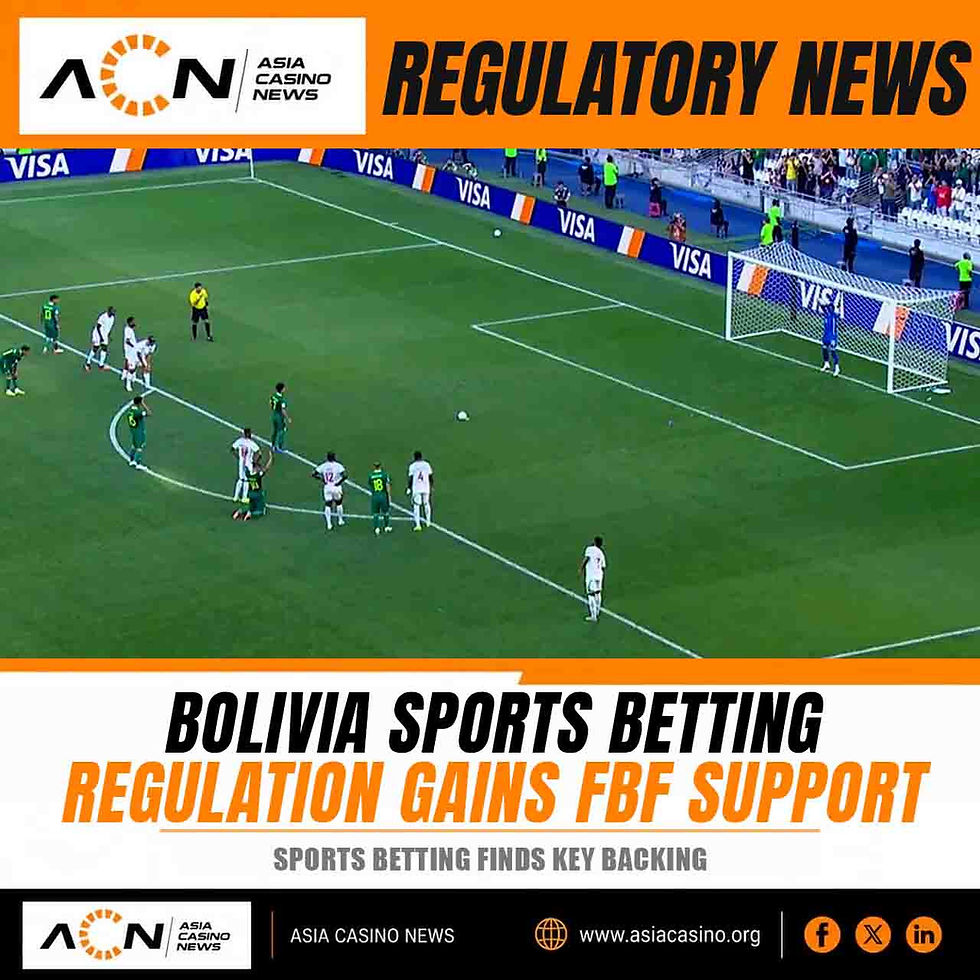
Bolivia’s football leadership is backing the creation of a dedicated regulatory framework for online sports betting, potentially reopening discussion over how the country could license and supervise a market that currently lacks authorized sports betting operators.
Fernando Costa, president of the Federación Boliviana de Fútbol (FBF), has publicly supported Bolivia sports betting regulation, arguing that betting has become an important source of financial support for football internationally. His comments were reported by CDC Gaming, citing G3 Newswire.
The proposal does not represent a regulatory change yet. Instead, it adds institutional support to an ongoing debate over whether Bolivia should modify its gambling framework to formally accommodate sports betting.

Bolivia sports betting regulation faces legal reform question
Bolivia’s gambling system is primarily governed by Ley 060, the country’s 2010 law covering lottery and gambling activities. The Autoridad de Fiscalización del Juego (AJ) is responsible for licensing and enforcement.
The AJ maintains regulations covering licensed gambling activity, including a framework for online games of chance. However, the authority stated in July 2025 that there were no authorized online sports betting sites in Bolivia and warned consumers about the risks associated with unauthorized platforms. The regulator also announced legal action against an organizer of an illegal online sports betting operation using a website and WhatsApp groups.
That distinction is important because Costa’s proposal is focused specifically on creating a framework capable of bringing sports betting into a formal regulatory structure. Bolivia sports betting regulation could therefore require changes to the existing legal framework before operators could enter a formally licensed market.
According to reporting on his comments, Costa said he had held discussions with political representatives of the government about possible changes to Ley 060. Any reform would still require formal government and legislative action before a regulated sports betting market could be established.
FBF links betting regulation to football revenue
Costa’s argument is closely connected to the financial position of football clubs.
The FBF president said sports betting has become a major funding source for football globally and, in some markets, has exceeded broadcasting revenue. The claim reflects Costa’s view of the commercial importance of betting rather than an independently verified measure of football financing across all markets.
For Bolivian clubs, a regulated market could potentially create new opportunities through betting-related commercial arrangements if lawmakers establish rules permitting them. Such arrangements could include sponsorship and other forms of commercial activity, although the precise opportunities would depend on any future legislation and implementing regulations.
The discussion around Bolivia sports betting regulation is therefore not limited to online gambling operators. It could also affect professional football organizations if future legislation permits betting sponsorships, partnerships or other commercial relationships.
The issue has previously reached the football sector. Reporting indicates that the FBF had asked the AJ about the possibility of clubs displaying betting-company brands on their uniforms. The request was not permitted under the existing framework.
Bolivia's illegal betting problem adds regulatory pressure
The regulatory debate is also taking place against continued enforcement against unauthorized betting.
In July 2025, the AJ said it had initiated administrative proceedings and referred a case to Bolivia’s Public Prosecutor’s Office involving an alleged illegal online sports betting organizer. The authority said the operation used a website and WhatsApp groups to attract bettors and accepted bank transfers through QR codes.
The AJ has also continued to maintain dedicated regulatory and enforcement structures for gambling. Its current regulations include licensing procedures and responsible-gaming rules, while its published regulatory framework lists Ley 060 as the governing legislation.
For policymakers, the existence of unauthorized betting creates a potential argument for examining whether a formal licensing system could provide greater oversight and consumer safeguards. However, that remains a policy consideration rather than an established outcome of Costa’s proposal.
No regulated sports betting market has been announced
Costa’s intervention should therefore be viewed as advocacy for regulatory reform rather than confirmation that Bolivia is preparing to launch licensed online sports betting.
There is currently no announced timetable for a legislative change resulting from the proposal in the reporting reviewed for this article. Any future market would depend on decisions by the Bolivian government and lawmakers, followed by the development of licensing, compliance, consumer-protection and enforcement requirements.
The development nevertheless places Bolivia sports betting regulation more prominently on the country’s regulatory agenda and gives the nation’s football federation a direct stake in the discussion.
For the wider Latin American gaming industry, the debate is another example of sports organizations becoming stakeholders in gambling-policy discussions as governments consider how to balance potential economic benefits with licensing, consumer protection and integrity requirements.
About Asia Casino News
Asia Casino News covers developments across the casino, iGaming, betting, regulation and gaming industries in Asia and international markets. Our coverage follows the legal, regulatory and commercial changes shaping the global gambling industry. Visit Asia Casino News for more industry news, analysis and gambling guides.

Sources
CDC Gaming


Comments