


What Is Match Fixing in Esports? Betting Risks, Rules and Integrity

Updated: 5 days ago

Match fixing is one of the most serious threats to competitive integrity in esports. It occurs when players, team personnel, or other participants deliberately manipulate a match, an in-game event, or another competitive element instead of allowing the result to be determined by normal skill and play.
The issue becomes more significant when betting markets are involved. Esports betting gives fans more ways to wager on competitions, but it can also create incentives for someone to influence an outcome or a specific event within a match. The Esports Integrity Commission (ESIC) specifically identifies the growth of esports betting, including in-game and other betting products, as a factor that can increase the risk of corrupt betting practices.
For readers searching for the match fixing meaning, one distinction is especially important: match fixing is not the same as matched betting. Match fixing is a form of manipulation or corruption, while matched betting is a separate betting term and should not be treated as a synonym.
What is the match fixing meaning in esports?
Match fixing means deliberately influencing the result, progress, conduct, or another aspect of a competitive match so that it no longer reflects a genuine contest.
Riot Games describes match-fixing as manipulation of a match or specific in-game events, including deliberately losing or controlling a particular game element to meet predetermined conditions. Riot also notes that match-fixing can damage trust, competitive integrity, and the credibility of esports.
ESIC's Anti-Corruption Code takes a similar approach. Its rules prohibit fixing, contriving, or improperly influencing the result, progress, conduct, or any other aspect of a match. The code also specifically covers ensuring that a particular incident occurs for betting or other corrupt purposes.
This means match fixing does not always require a player to deliberately lose the entire match. A participant could potentially manipulate a smaller part of a competition, sometimes called spot-fixing, if the action is intended to satisfy a predetermined condition.
What is match fixing in esports and how does it happen?
Match fixing can take different forms depending on the game, competition format, betting market, and people involved.
A simple example would be a player intentionally underperforming so an opposing team wins. Another possibility is manipulating a specific in-game event rather than the final result. ESIC's Anti-Corruption Code expressly covers deliberate underperformance and the deliberate creation of particular incidents for betting or corrupt purposes.
The risk can extend beyond players. Coaches, managers, team officials, agents, and other people connected to esports competitions may also fall within integrity rules when they have responsibilities covered by the relevant code. ESIC's Anti-Corruption Code applies to a broad range of participants and requires them to comply with its integrity requirements.
Another important factor is inside information. Information that is not publicly available may become valuable to bettors, and ESIC rules prohibit participants from using inside information for betting or knowingly disclosing it where it could be used for betting.

What is match fixing in esports and how does it happen?
Match fixing can take different forms depending on the game, competition format, betting market, and people involved.
A simple example would be a player intentionally underperforming so an opposing team wins. Another possibility is manipulating a specific in-game event rather than the final result. ESIC's Anti-Corruption Code expressly covers deliberate underperformance and the deliberate creation of particular incidents for betting or corrupt purposes.
The risk can extend beyond players. Coaches, managers, team officials, agents, and other people connected to esports competitions may also fall within integrity rules when they have responsibilities covered by the relevant code. ESIC's Anti-Corruption Code applies to a broad range of participants and requires them to comply with its integrity requirements.
Another important factor is inside information. Information that is not publicly available may become valuable to bettors, and ESIC rules prohibit participants from using inside information for betting or knowingly disclosing it where it could be used for betting.
Is match fixing the same as matched betting?
No. These are different concepts.
Match fixing refers to manipulating a competition or event for an improper purpose, including betting-related corruption.
Matched betting is a separate betting concept that generally refers to using opposing bets or betting positions to manage exposure around a promotional offer or betting outcome. It should not be described as match manipulation.
This distinction matters for SEO as well as accuracy. A page targeting the phrase "matched betting esports" can accidentally suggest that matched betting is itself a form of corruption. The more accurate relationship is that esports betting markets can create integrity risks when people attempt to manipulate matches or in-game events.
ESIC separates corruption, betting activity, and misuse of inside information within its Anti-Corruption Code.
How does esports betting create match-fixing risks?
Betting markets can increase the commercial value of an esports result or a specific event inside a match.
ESIC's Esports Betting Product Standard was created because esports matches designed specifically to create betting products present distinct integrity challenges. ESIC notes that bettors may have an incentive to persuade players to manipulate outcomes to guarantee particular bets.
This risk is not limited to the final winner. Modern esports betting can involve different markets and, depending on the product and jurisdiction, events that happen during a match. That creates more potential points where manipulation could theoretically occur.
This is one reason esports integrity programs focus on prevention, monitoring, education, reporting, and investigation rather than simply checking whether a team won or lost.

Which esports games are affected by match-fixing risks?
There is no single esports game that can accurately be described as the "match-fixing game." Integrity risk can exist across competitive titles and tournament formats, particularly where betting markets are available and participants have opportunities or incentives to influence outcomes.
Riot Games' integrity program covers major League of Legends and VALORANT competitions and works with independent integrity partners to monitor betting activity and investigate suspected match-fixing. Riot says Sportradar's monitoring has expanded beyond major competitions to include academy and regional Tier-2 leagues as well as the VALORANT Champions Tour.
The relevant lesson is not that a particular title is inherently unsafe. Instead, the level of exposure can depend on factors such as tournament structure, participant incentives, the availability of betting markets, monitoring systems, and the strength of tournament controls.
ESIC's Gold Standard is designed to apply broadly to tournament organizers that create matches for betting markets rather than being limited to one specific esports title.
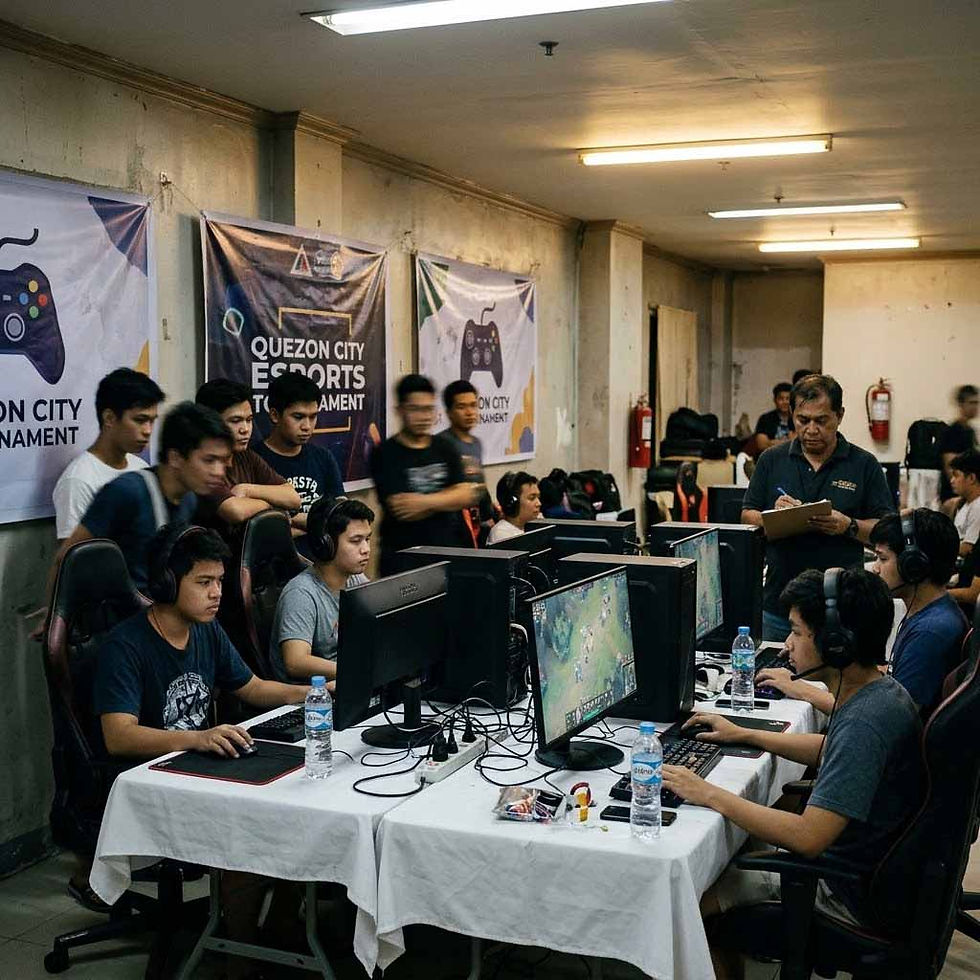
Why can smaller esports competitions face integrity challenges?
Smaller competitions can have different integrity risks from large, highly monitored events.
A major international tournament may have professional referees, structured player contracts, surveillance, dedicated integrity personnel, anti-cheat systems, and extensive monitoring. Smaller events may not always have the same resources.
ESIC's Gold Standard illustrates the types of safeguards that can be used. Its framework includes studio security, CCTV coverage,
communication-device restrictions, event oversight, referee training, employee background checks, player verification, reporting mechanisms, and cooperation on suspicious betting alerts.
That does not mean every smaller tournament is vulnerable or every larger tournament is protected from problems. It means the strength and consistency of integrity controls can affect the ability to prevent, detect, and investigate suspicious conduct.
How do esports organizations detect suspicious betting?
Detection can involve multiple sources of information rather than one unusual bet.
Riot Games says its integrity partnership with Sportradar includes monitoring global betting markets and identifying suspicious betting patterns. Riot states that Sportradar's system monitors betting activity across hundreds of betting operators and supports investigations into suspected match-fixing.
ESIC also describes collaboration, reporting mechanisms, surveillance, oversight, player information, and suspicious betting alerts as components of its integrity framework.
An unusual betting pattern is therefore best understood as an integrity signal, not automatic proof that match fixing occurred. A proper investigation may need to examine match footage, betting evidence, communications, witness information, participant behavior, and other relevant evidence.
ESIC's published disciplinary decision involving Dmytro "SENSEi" Shvorak, Maksym "THRONE" Semenov, Artur "DarkS1DE" Kravchenko, and Danylo "nat1ve" Bakin provides an example. ESIC said its investigation included betting evidence, match analysis, witness corroboration, and betting-pattern analysis before disciplinary action was imposed.
What are the rules against match fixing?
Different esports publishers, tournament organizers, integrity organizations, and jurisdictions may have different rules. There is therefore no single worldwide rulebook covering every esports competition.
Under ESIC's Anti-Corruption Code, prohibited conduct includes improperly influencing a match, deliberately underperforming for corrupt purposes, manipulating a particular incident for betting purposes, offering or accepting rewards linked to corruption, and certain betting activities involving a competition in which the participant is professionally involved.
The code also requires participants to report approaches or information that may indicate corrupt conduct. ESIC states that delaying a report until after the relevant match or event can itself create a problem under its reporting requirements.
Riot Games similarly describes match-fixing, gambling, and failures to report certain conduct as serious breaches of its esports conduct framework and says it investigates alleged violations on a case-by-case basis.

What does Philippine law say about game fixing?
The Philippines has a specific decree addressing betting and game-fixing in sports contests.
Presidential Decree No. 483, titled Penalizing Betting, Game-Fixing or Point Shaving and Machinations in Sports Contests, addresses game fixing, point shaving, machinations, and betting in sports contests. The issuance is part of the Philippine legal framework concerning fraudulent manipulation of sporting competitions.
The decree is important when discussing the Philippine perspective, but its wording should be presented carefully when applied to esports. An article should not automatically state that every form of esports match manipulation is governed by P.D. 483 without considering the facts and the applicable legal framework.
For a general audience, the safest explanation is that Philippine law has long prohibited forms of game-fixing and betting-related manipulation in sports contests, while the exact legal treatment of a particular esports incident requires a fact-specific assessment.
Is there a new Philippine Anti-Fixing Act?
As of August 2026, there is also a newer legislative proposal worth mentioning.
Senate Bill No. 1699, titled the Anti-Fixing Act, was filed on January 27, 2026. The Senate legislative record lists its status as pending in committee as of February 2, 2026. It is therefore a proposed measure and should not be presented as an enacted Philippine law.
A related House Bill No. 4513, also known as the Anti-Game-Fixing Act, was filed during the 19th Congress. The Senate Legislative Reference Bureau records that the House approved the bill on third reading on November 28, 2022, after which it was transmitted to the Senate; the record lists it as pending in committee.
This distinction is important for readers: a bill can show legislative intent or policy direction, but it does not carry the same legal status as a statute that has been enacted.
What penalties can apply to esports match fixing?
The consequences depend on the organization, competition rules, applicable code, and potentially national law.
Under the ESIC Anti-Corruption Code, corruption-related violations can result in periods of ineligibility ranging from a minimum number of events to a possible lifetime sanction depending on the offense and circumstances. Betting violations have their own sanction range, while misuse of inside information can also lead to ineligibility.
Riot Games states that match-fixing violations can lead to serious disciplinary action, including tournament bans and other consequences, while also noting that cases are evaluated individually.
An actual ESIC disciplinary case shows how enforcement can work in practice. In its November 29, 2023 statement, ESIC announced two-year suspensions for four professional players after investigations concerning match-fixing activities and suspicious betting evidence. The stated suspension period ran from October 24, 2023 to October 24, 2025.
Because that sanction period ended in 2025, it should be treated as a historical disciplinary example, not as a statement about the participants' current status.
How can tournament organizers protect esports integrity?
Integrity protection starts before a suspicious incident occurs.
ESIC's Gold Standard recommends a multi-layered system involving secure venues, surveillance, communication controls, independent event oversight, referee training, background checks, player-skill verification, staff conduct rules, reporting channels, and cooperation with suspicious betting alerts.
Riot Games similarly describes its approach as a combination of regulations and processes, education, enforcement, transparency, and technology-supported monitoring.
This is important because match fixing is not only a betting problem. It is an integrity problem that can affect players, teams, tournament organizers, publishers, betting operators, sponsors, and fans.
What should esports fans know about suspicious betting?
Fans should be careful not to treat an unusual score, unexpected comeback, strange player performance, or major odds movement as automatic proof of match fixing.
Suspicious activity can justify further review, but a conclusion about manipulation should be based on credible evidence and an appropriate investigation.
That distinction is essential for responsible reporting. False accusations can harm players and teams just as serious integrity violations can harm the esports ecosystem.
Readers who encounter credible information about potential manipulation should use the reporting channels provided by the relevant tournament organizer, game publisher, integrity body, or other appropriate authority rather than attempting to conduct public accusations themselves.
Why does esports integrity matter?
Esports depends on the belief that competitive results are genuine.
If players or teams cannot be trusted to compete honestly, the value of tournaments, broadcasts, sponsorships, fan engagement, and betting markets can all suffer. ESIC identifies public confidence in match authenticity and integrity as fundamental to esports, while Riot describes competitive integrity as crucial to the industry's success and longevity.
Protecting integrity therefore benefits more than betting operators. It helps preserve a fair competitive environment for players and teams and gives fans confidence that what they are watching is a real contest.
Frequently asked questions about match fixing in esports
What is match fixing in esports?
Match fixing is the deliberate manipulation of a match, its progress, result, conduct, or a specific in-game event for an improper or corrupt purpose. Betting-related manipulation is one important form of match fixing addressed by esports integrity rules.
Is match fixing the same as matched betting?
No. Match fixing is competitive manipulation. Matched betting is a separate betting concept and should not be used as another name for match fixing.
What is esports integrity?
Esports integrity refers to the systems, rules, monitoring, education, enforcement, and reporting processes used to protect fair competition and prevent cheating, match manipulation, corruption, and related misconduct.
Which esports games have match-fixing risks?
Integrity risks can exist across different esports titles and tournament formats. The risk should be assessed based on the competition, participants, betting markets, and integrity controls rather than labeling an entire game as inherently vulnerable.
Can suspicious betting prove match fixing?
No. Suspicious betting can be an indicator that triggers review or investigation, but it is not by itself proof that a match was fixed. Investigators may consider betting evidence together with match analysis, witness information, communications, and other evidence.
Is game fixing illegal in the Philippines?
The Philippines has P.D. 483, which addresses betting, game-fixing, point shaving, and machinations in sports contests. Whether a particular esports incident falls within a particular legal provision requires a fact-specific legal assessment.
Is the Philippine Anti-Fixing Act already law?
Not based on the current Senate legislative record reviewed for this article. SBN-1699 was filed in January 2026 and was listed as pending in committee in February 2026. It should therefore be described as a proposed bill, not an enacted statute.
Conclusion
Match fixing is more than deliberately losing an esports match. It can involve manipulating the final result, controlling a specific in-game event, using inside information for betting, or otherwise influencing a competition for a corrupt purpose.
As esports betting markets continue to develop, integrity programs have become increasingly important. ESIC's standards emphasize prevention, oversight, security, education, reporting, and suspicious betting monitoring, while major publishers such as Riot Games maintain their own rules and investigative frameworks.
For readers in the Philippines, the legal picture should also be understood carefully. P.D. 483 provides an established Philippine framework concerning game fixing and betting, while newer anti-fixing bills such as SBN-1699 remain legislative proposals based on the status available in August 2026.
The central point is simple: legitimate esports competition depends on unpredictable results produced by genuine skill and fair play. Strong integrity rules help protect that principle for players, organizers, fans, and the wider esports industry.
This article provides general informational content about esports integrity, betting, and Philippine legal developments. It is not legal advice. Laws, regulations, tournament rules, and organizational codes may change and should be checked against the latest official sources.
About Asia Casino News
Asia Casino News covers developments across online gaming, betting, casino entertainment, esports, and related industry topics in Asia and global markets. For more industry coverage and casino-related news, visit Asia Casino News.

Sources
Esports Integrity Commission (ESIC): Esports Betting Product Standard: https://esic.gg/esports-betting-product-standard/
ESIC: Gold Standard Regulation Principles: https://esic.gg/esic-gold-standard-regulation-principles/
ESIC: Anti-Corruption Code: https://esic.gg/codes/anti-corruption-code/
ESIC: Disciplinary Action Against Dmytro “SENSEi” Shvorak, Maksym “THRONE” Semenov, Artur “DarkS1DE” Kravchenko, and Danylo “nat1ve” Bakin: https://esic.gg/sanction-outcome/public-statement-on-disciplinary-action-against-participants-dmytro-sensei-shvorak-maksym-throne-semenov-artur-darks1de-kravchenko-and-danylo-nat1ve-bakin/
Riot Games Competitive Operations: Anti-Match-Fixing: https://competitiveops.riotgames.com/en-US/anti-match-fixing
Philippines: Presidential Decree No. 483: https://elibrary.judiciary.gov.ph/thebookshelf/showdocs/26/24684
Senate of the Philippines: Senate Bill No. 1699, Anti-Fixing Act: https://senate.gov.ph/legislative-documents/bills/615464
Senate Legislative Reference Bureau: House Bill No. 4513, Anti-Game-Fixing Act: https://issuances-library.senate.gov.ph/bills/house-bill-no-4513-19th-congress


Comments